
How Chess Engines Introduced Coders to Search Algorithms
Long before machine learning became a buzzword, chess programs were already teaching a generation of hobby coders one of the oldest ideas in computer science: search. A chess engine does not understand the game the way a human does.
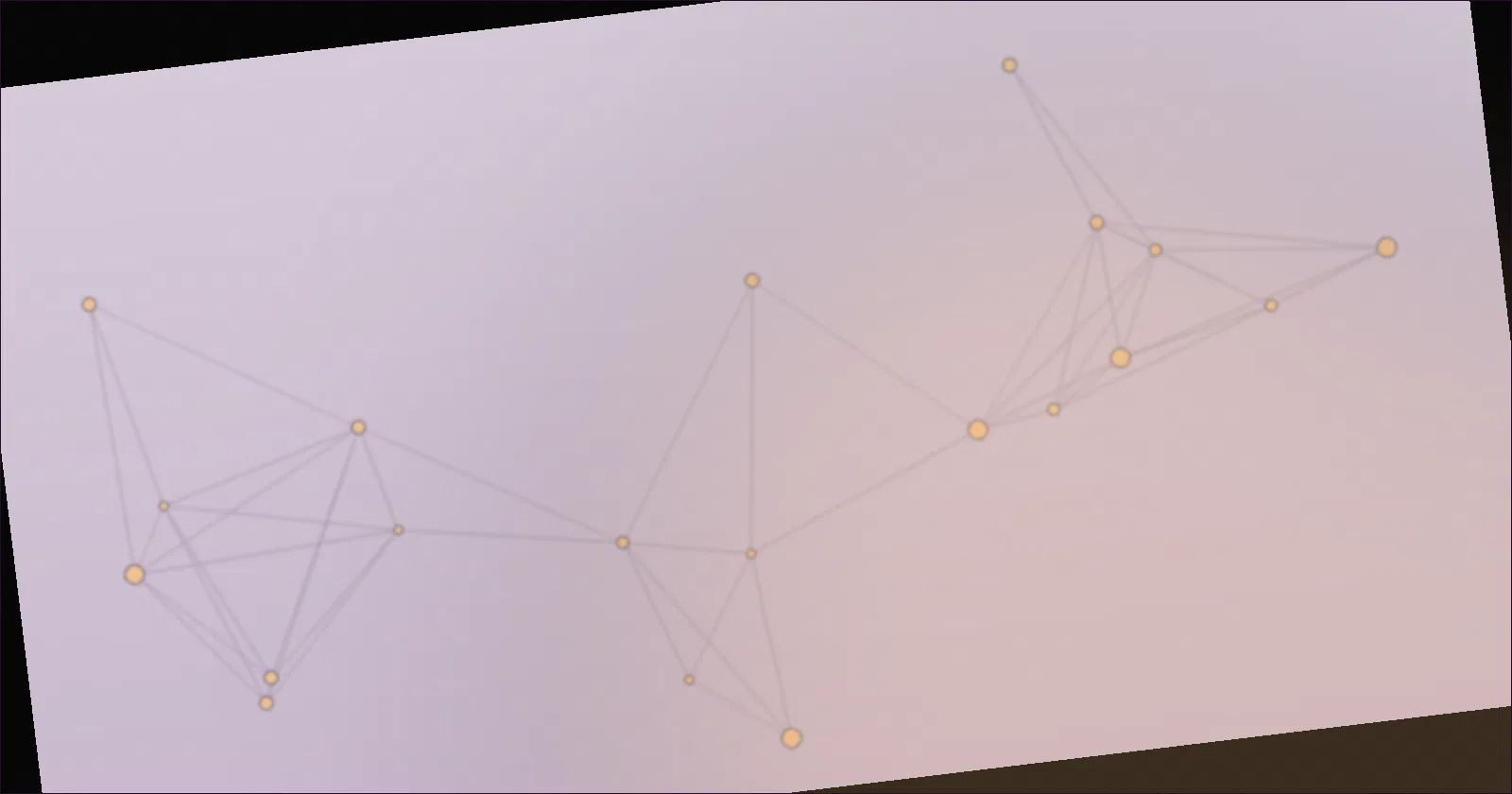
Long before machine learning became a buzzword, chess programs were already teaching a generation of hobby coders one of the oldest ideas in computer science: search. A chess engine does not understand the game the way a human does. It simply looks ahead through possible moves, scores what it finds, and picks the path that scores best. That single idea, stripped of chess entirely, shows up in route planners, puzzle solvers, and plenty of beginner Python projects, which makes chess programming a surprisingly useful on-ramp into algorithmic thinking.
What makes chess such a good teaching example is not the game itself but how small the rules are compared to how deep the resulting problem gets. A beginner can learn how pieces move in an afternoon, yet the search problem built on top of those simple rules has occupied computer scientists for decades. That gap between simple rules and a hard underlying problem is exactly the kind of thing worth noticing early, since it reappears in plenty of other games and puzzles once a coder learns to recognize the shape of it.
The tree every chess program hides
Every legal move from a chess position leads to a new position, which itself has its own legal moves, and so on. Drawn out fully, this branching turns into a tree that grows explosively with each additional move considered, since a modest branching factor compounds fast across even a handful of levels deep. A chess engine never draws this tree on screen, but every search it runs is walking through exactly that structure, deciding which branches are worth exploring and which can be ignored. Understanding that the tree exists, even informally, is the first real step toward understanding how the engine thinks.
Minimax turns a tree into a decision
Minimax is the rule that turns a bare tree of possible moves into an actual decision. One side tries to maximize the score of the resulting position, the other tries to minimize it, and the algorithm assumes both players always make their best available move. Working through a tiny three-move example by hand, on paper or in a short Python loop, makes the idea click far faster than reading a definition, because the back-and-forth scoring pattern becomes obvious once you trace it yourself rather than taking it on faith.
Why brute force runs out of road fast
A chess position typically has around thirty legal moves, and that branching factor compounds with every additional move looked ahead, so a full search even a handful of moves deep already becomes too slow to finish in a reasonable time on ordinary hardware. This is the exact wall every beginner hits the first time they try to brute-force a search problem, whether it is chess, a maze, or a simple puzzle game. The lesson chess programming teaches early is that brute force is a starting point for understanding a problem, not a shipping solution, and that realization transfers directly to simple games coded in Python that look deceptively small on the surface.
Alpha-beta pruning cuts the tree down
Alpha-beta pruning solves the explosion problem by skipping branches that cannot possibly change the outcome, because a smarter opponent would simply never allow that line to happen. The engine keeps a running best and worst score seen so far, and the moment a branch proves worse than an already-found alternative, it stops exploring that branch entirely rather than finishing it out. In practice this lets an engine search roughly twice as deep for the same amount of work, without changing the final answer at all, which is a rare case where an optimization is both faster and exactly as correct as the slow version it replaces.
Evaluation functions replace human judgment
Search alone cannot decide anything without a way to score a position once the lookahead stops, and that scoring job falls to an evaluation function. Early chess programs used simple counts, such as how much material each side held and whether pieces sat on useful squares, and even those rough scores were enough to produce surprisingly solid play. This is a useful reminder for anyone building their own small search project: a crude scoring function paired with a correct search often beats a clever scoring function paired with a sloppy one, because the search is doing most of the real work.
The same pattern shows up outside chess
Once the tree, minimax, and pruning pattern is visible in chess, it becomes hard not to notice the same shape in other places. A tic-tac-toe solver, a simple route-finding script, and even some puzzle-game solvers lean on the identical idea of scoring outcomes ahead of time and working backward to the current move. That overlap is exactly why chess programming makes such a solid coding club project: the finished code is small enough for beginners to finish in a few sessions, but the underlying idea reappears constantly in later, more ambitious projects.
Counting nodes makes the improvement visible
A simple counter that tracks how many positions the search actually visits turns alpha-beta pruning from an abstract claim into a number a beginner can watch change in real time. Running the same tic-tac-toe or four-in-a-row search with pruning switched on and off, while printing the node count each time, usually produces a gap large enough to be genuinely surprising, often cutting the work by more than half even on a tiny board. This habit of measuring rather than assuming an optimization helped is worth keeping well beyond this one project, since it applies to almost any Python practice exercise involving a loop that might be doing more work than it needs to.
A starting project worth trying
A reasonable first project is not a full chess engine but a minimax solver for tic-tac-toe, which has a tiny enough tree to search completely without any pruning at all. Once that works end to end, adding alpha-beta pruning to the same code, then watching it run noticeably fewer calculations for an identical result, makes the benefit of pruning concrete rather than theoretical. From there, a four-in-a-row game or a small chess subset with limited pieces gives the branching factor enough room to matter, which is exactly when pruning stops being optional and starts being the whole point of the exercise. Teaching this project to a mixed-skill coding club works well too, since newer members can focus purely on getting minimax correct while more experienced members take on the pruning step as a follow-up challenge.
More in Games
 Games
How Coding a Number Draw Game Teaches Probability
Probability is one of those topics that stays slippery on paper and suddenly makes sense the moment you code it.
 Games
How Coding a Game Trivia Quiz Teaches Python Dictionaries
Dictionaries are where a lot of beginners stall. Lists make intuitive sense because they are just things in a row, but a...
 Games
Why Coding Game Hangman Teaches Strings and Loops
Ask a new programmer to practice string handling and their eyes glaze over.